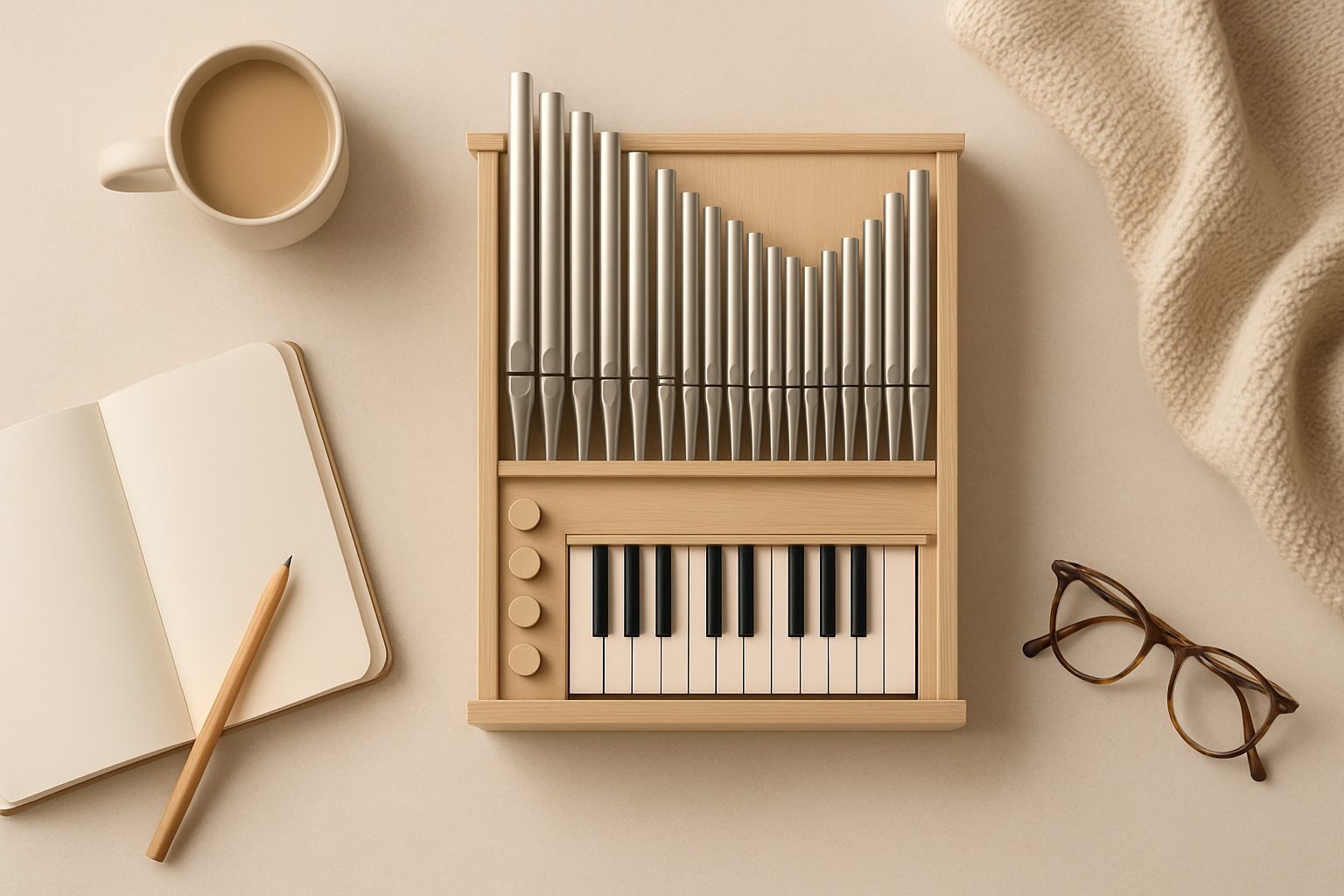
Best MIDI Pipe Organ Consoles for Home Studios UK: Top 5 in 2026
If you're building a home pipe organ setup with Hauptwerk or GrandOrgue software, the MIDI console you choose makes the difference between a frustrating keypad experience and one that actually feels like playing an instrument. A proper MIDI console gives you the keyboards, pedalboards, and stop controls that organ software is designed for—but the market is fragmented and options range from budget DIY rigs to five-figure custom builds. This guide covers what's actually available through UK retailers and what works well in practice.
Why a Dedicated MIDI Console Matters
Playing pipe organ software with a standard MIDI keyboard is workable but limited. You lose the physical control of stops, couplers, and pistons that organ music relies on. A proper console integrates keyboards, a pedalboard, and programmable stop controls into a single interface. Hauptwerk and GrandOrgue both support extensive MIDI configuration, so the right hardware setup transforms software organs from academic curiosity into genuinely playable instruments.
The challenge is that pipe organ MIDI consoles sit in a niche market. You won't find many off-the-shelf options specifically marketed as "organ consoles"—instead, you're either adapting general-purpose MIDI controllers, building custom solutions, or commissioning specialist builders. The good news is that several practical approaches exist within reasonable budgets for home studios.
What to Look For
Keyboard action: Weighted keys are essential. Aftertouch sensitivity helps with expression. Many organists add piano-weighted MIDI keyboards as manuals because they respond more naturally to organ technique than semi-weighted synth keys.
Pedalboards: This is where off-the-shelf solutions often fall short. A 32-note pedalboard (typical for English organ music) is rare in consumer MIDI gear. Some builders sell pedalboard kits; others adapt dance pads or build custom solutions from arcade controllers.
Stop control: Buttons, sliders, or rotary encoders mapped to organ stops. Programmable pistons (memory buttons that recall stop combinations) are standard on any worthwhile console.
Software compatibility: Hauptwerk and GrandOrgue both use standard MIDI note-on/off, CC, and Program Change messages. Almost any MIDI device will work technically—the question is usability.
The Main Options
1. Nektar Impact LX Series with Custom Mapping
The Nektar Impact LX88+ (88 weighted keys) is the most accessible entry point for many UK-based organists. It's a piano-weighted controller available through retailers like Thomann UK and Gear4Music. The keys feel decent, and the eight assignable faders and 16 pads can be mapped to organ stops and pistons. You'll need to add a pedalboard separately (most organists pair it with a used Behringer FCB1010 foot controller or build something custom).
Pros: Weighted keys, readily available, under £600. Good MIDI learn function for stop mapping. Decently-sized device that sits in a standard keyboard stand.
Cons: Faders are better for expression than stop control. Pedalboard is extra cost and complexity. Requires software configuration to map everything sensibly. Overkill if you only want one manual.
2. Hauptwerk Native Integration Controller
Johannus (a Dutch manufacturer) produces the Viscount Physis and similar consoles specifically designed for Hauptwerk, available through UK specialist dealers. These are three-manual consoles with built-in pedalboards and full stop controls, priced from around £3,500 upwards.
Pros: Purpose-built for organ software. Pedalboard and all controls integrated. Professional feel and build quality. Straightforward MIDI mapping (often pre-configured).
Cons: Significant investment. Limited availability in the UK—usually special order. Overkill for casual hobbyists.
3. DIY Keyboard + Foot Controller Combination
Many organists piece together a setup: a weighted MIDI keyboard (88 keys) paired with a Behringer FCB1010 (programmable foot controller with expression pedal). The foot controller handles stops and pistons via MIDI CC and Program Change. Total cost is usually £400–600.
Pros: Flexible, affordable, both devices are available in the UK. Can adapt and reconfigure as your needs change. Behringer FCB1010 is programmable and widely supported.
Cons: Requires manual MIDI mapping and testing. Pedalboard (if added) sits separately and is awkward to position. Doesn't feel as integrated as a purpose-built console.
4. Used Church Organ MIDI Retrofit
Occasionally, old electronic organs (Technics, Yamaha) appear secondhand with MIDI outputs. Some enthusiasts source defunct organs, restore them, and retrofit MIDI controllers. Custom builders in the UK sometimes offer this service.
Pros: Authentic organ feel. All controls integrated. Often surprisingly affordable secondhand.
Cons: Inconsistent availability. Quality varies wildly. Repair costs can be hidden. Not realistic unless you find the right deal.
5. Custom-Built Console from Specialist Makers
UK and European builders (such as some listed in organ societies) design bespoke MIDI consoles. Expect £2,000–8,000+ depending on size and finish. These are fully integrated with weighted keyboards, pedalboards, and comprehensive stop control.
Pros: Purpose-designed. Can specify exactly what you want. Professional results.
Cons: Long lead times. High cost. Requires detailed consultation before building.
Practical Recommendation for Most Home Studios
Start with a weighted 88-key MIDI keyboard (Nektar Impact, Roland FP-90X, or similar) paired with a Behringer FCB1010 foot controller. This combination is available in the UK now, costs under £700 total, and covers keyboards, pedalboard basics, and stop control. You'll spend an afternoon setting up MIDI mappings in Hauptwerk or GrandOrgue, but it works reliably.
If you find yourself playing regularly and want a better integrated experience, move to a purpose-built three-manual console later. The keyboard and foot controller won't go to waste—they'll integrate into your setup or be useful for other projects.
Final Thoughts
The "best" MIDI organ console for your home studio depends on your budget, how seriously you play, and whether you want a finished product or are happy to configure hardware. The good news is that Hauptwerk and GrandOrgue are flexible enough to work with almost any MIDI device. The practical constraint is finding or building a setup that actually feels like an organ to play—and that requires a proper pedalboard and sensible stop control, not just a keyboard.
More options
- Digital Organ Keyboards & MIDI Manuals (Amazon UK) (Amazon UK)
- MIDI Organ Pedalboards (Amazon UK) (Amazon UK)
- Studio Headphones for Silent Organ Practice (Amazon UK) (Amazon UK)
- Organ Bench & Adjustable Keyboard Stools (Amazon UK) (Amazon UK)
- Hauptwerk & Organ Method Books (Amazon UK) (Amazon UK)