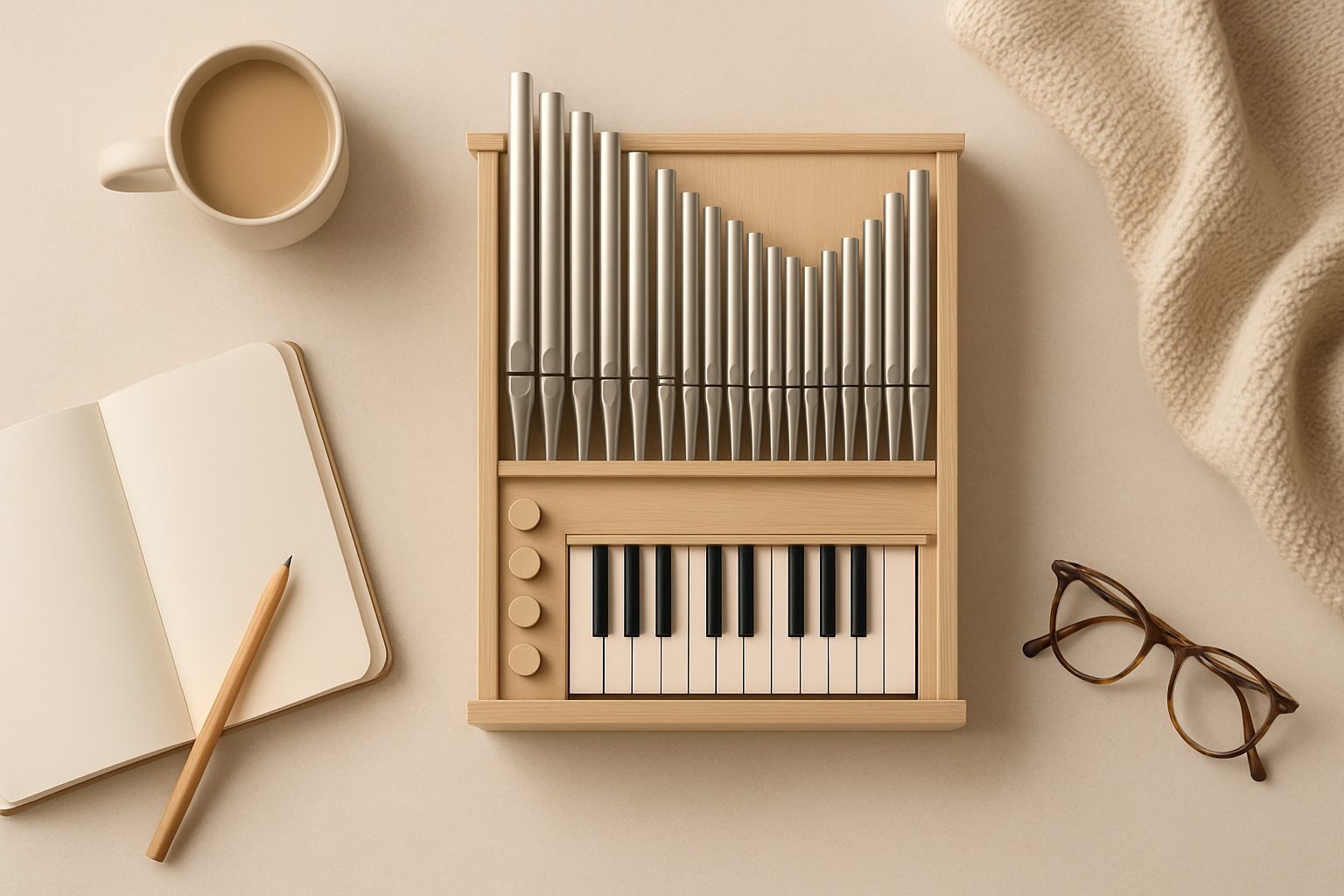
Church Organ vs Home Digital Organ UK: Which Should You Buy?
Dreaming of learning or playing organ at home? You've got two main routes: acquiring a decommissioned pipe organ from a closed church or investing in a modern digital equivalent. Both have genuine appeal, but they're radically different propositions. Understanding the practical realities matters far more than romantic notions about wooden pipes.
Pipe Organs: The Appeal and the Reality
Second-hand pipe organs are genuinely available in the UK—churches close regularly, and some organs are destined for scrap rather than new homes. The sound is unmistakably rich; no digital has quite captured the acoustic complexity of air moving through reeds and pipes, or the subtle variations in tone as air pressure varies.
The catch is substantial. A modest decommissioned organ—maybe 20 to 30 stops—costs between £3,000 and £10,000 to purchase. But that's just the start. Installation is the real expense. You need structural assessment, specialist installation, and likely electrical work for the blower. Expect £5,000 to £20,000+ depending on your home's condition and the organ's complexity. A builder's survey specifically recommending organ installation is essential; churches' sturdy floors and reinforced wooden frameworks won't exist in a typical Victorian terrace.
Maintenance is ongoing. Pipes need regulation, bellows and leather components perish, and dust accumulation affects tone. You'll need to find (and afford) a qualified organ technician—not a common trade these days. A full service every 5 to 10 years runs £1,000 to £3,000. Damp and temperature fluctuations wreak havoc; pipe organs are sensitive instruments that prefer stable conditions your central heating may not provide.
Space demands are serious. Even a modest organ occupies a large cupboard's worth of area. Some people sacrifice a bedroom or dedicate a garage-conversion entirely. Dust, vibration, and occasional noise are inherent.
Digital Organs: Practicality Meets Ambition
A quality digital home organ—brands like Viscount, Allen, and Johannus—ranges from £2,000 for entry-level models to £10,000+ for sophisticated instruments. What you get is immediate: unpack, connect, play. No installation beyond fitting it in your room.
Modern digital organs sound considerably better than they did a decade ago. Sampling and modelling technology has improved, and a good digital instrument can fool most ears in a domestic setting. It won't fool an experienced organist listening critically, but for learning, church organ repertoire practice, and entertainment, it's entirely credible. You choose drawstops, adjust voicing, and have complete control.
Maintenance is minimal. No pipes to regulate, no bellows to leak. Clean the keys occasionally. Electronics are stable. If something fails, replacement parts exist, and repair costs are far lower than pipe organ surgery.
Space efficiency matters. Most home digitals are console-sized: under two metres wide, about one metre deep. They fit corners, spare rooms, or even against a living-room wall if you're committed. You can move one if you relocate (something you absolutely cannot do with a pipe organ).
Sound Quality: Honest Comparison
Here's where I'll be direct: a digital organ sounds like a digital organ if you know what to listen for. The initial attack is slightly synthetic; the sustain, adequate; the release, controlled but not quite organic. Experienced listeners notice. A great pipe organ has acoustic complexity—harmonic interaction, physical resonance, air movement you almost feel—that digital still approximates rather than replicates.
But in your home, with typical acoustics and without a cathedral's reverberant space, a good digital is more satisfying than you might expect. And crucially, you can hear it at all hours without upsetting neighbours.
Cost Summary
Pipe organ route: £8,000 to £30,000+ initial outlay, plus £1,500 to £3,000 annually for maintenance and eventual restoration work.
Digital organ route: £2,000 to £10,000 initial outlay, virtually no ongoing costs beyond occasional repairs (likely under £500 if needed).
Practical Considerations
If you're learning: A digital organ makes sense. You can practice freely, adjust volume, try different voicings, and you're not committed to a single instrument permanently.
If your home is modest: A digital fits realistic spaces. Pipe organs need planning and structural work most homes don't accommodate easily.
If you want authentic church-service experience: A pipe organ delivers that unmistakably—but only if installation is genuinely feasible and affordable for your situation.
If you're serious about the instrument long-term: A pipe organ is irreplaceable in character, but demands genuine commitment to maintenance and eventual restoration. You're inheriting a historical instrument's needs.
The Honest Middle Ground
Many home organists start digital, fall in love with the instrument, and later pursue a smaller pipe organ once they know they're serious. This avoids the expense trap of buying an expensive pipe organ only to discover organ playing isn't actually for you.
Second-hand pipe organs are treasure when they find the right home—but that home needs practical solutions for installation, space, and maintenance. For most people considering a home organ, a quality digital is the sensible entry point. It removes the structural gamble and lets you focus on learning and enjoying the instrument itself.
More options
- Digital Organ Keyboards & MIDI Manuals (Amazon UK) (Amazon UK)
- MIDI Organ Pedalboards (Amazon UK) (Amazon UK)
- Studio Headphones for Silent Organ Practice (Amazon UK) (Amazon UK)
- Organ Bench & Adjustable Keyboard Stools (Amazon UK) (Amazon UK)
- Hauptwerk & Organ Method Books (Amazon UK) (Amazon UK)